Feddan
Hectares
m²
Current Phase
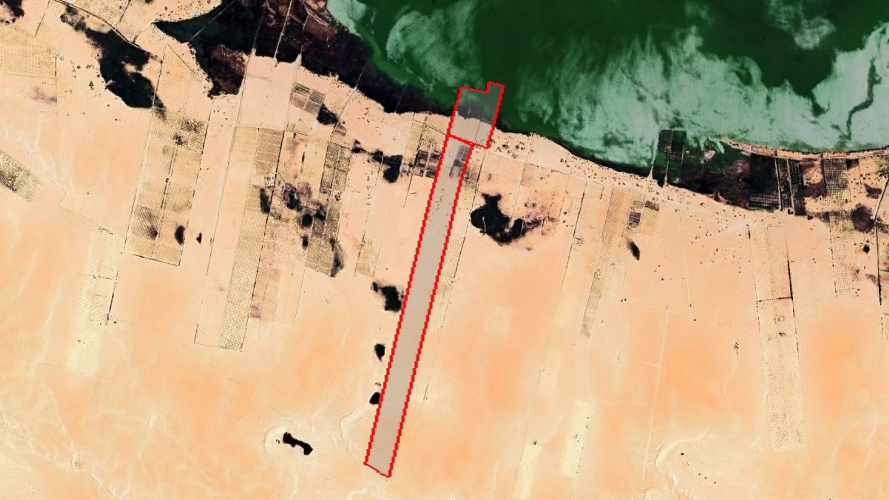
MaryGold is one of the core locations within the Green Spot Siwa and was the second land acquired by Marcel Jong to support the long-term development of the Foresteer vision in Siwa Oasis.
Covering approximately 28 hectares, MaryGold holds a special place in the history of Green Spot Siwa. In many ways, this location is the reason why Foresteer ultimately decided to establish its first Green Spot in Siwa Oasis.
The acquisition of MaryGold was funded by private investor Marcel Jong and his company Access2.IT as part of their commitment to developing the first Green Spot.
The local Egyptian company Marcelia Al Salam is responsible for the operational activities and development of the location.
During one of the early site visits in Siwa Oasis, local Bedouin residents introduced this land as a potential location for development.
At the site, a water pipe connected to an existing well was opened. Even without a pump installed, a significant volume of water flowed naturally from the well. This moment became a turning point.
The availability of water demonstrated that large-scale greening and planting activities could become a reality in this part of the desert. It was one of the key reasons why the decision was made to establish the first Green Spot in Siwa Oasis.
While water availability is an important advantage, responsible water management remains a core principle. The development of MaryGold focuses on efficient irrigation methods and the use of tree and plant species that require as little water as possible while still contributing to biodiversity and productivity.
The name MaryGold carries personal significance.
The location was named in honor of Mary Carty, the mother of Marcel Jong. An interesting coincidence is that a rare desert plant known as the Desert Hyacinth grows naturally on the land. Hyacinth is also one of Mary’s names, making this a unique and memorable connection to the site.
While this connection does not influence the purpose of the project, it remains a special part of the story behind MaryGold.
MaryGold benefits from an excellent water position compared to many other locations in the region.
The property currently contains two wells:
The land is situated near the lake and has favorable conditions for future agricultural development.
The northern section is already supported by infrastructure including:
The system operates directly on solar energy and does not require battery storage, reducing costs and simplifying maintenance.
The southern section still requires additional investment for solar panels, pumping equipment, and supporting infrastructure before large-scale planting can begin in that area.
MaryGold is primarily intended for agricultural development and productive planting activities.
Current and future activities include:
Because workers can easily travel from the nearby Marcelia Farm & Eco-Village, there is currently no need for additional housing or accommodation facilities on the land itself.
This allows investments to be focused directly on water infrastructure, planting activities, and land development.
MaryGold is actively being developed as part of Green Spot Siwa.
The northern section already benefits from operational water and solar infrastructure, allowing planting activities to continue and expand. The southern section represents the next major development area and will become operational once the required solar and pumping systems have been installed.
With its strategic location, available water resources, and agricultural potential, MaryGold is expected to play an important role in the continued expansion of Green Spot Siwa.
MaryGold represents an important bridge between vision and implementation.
The discovery of this land helped demonstrate that large-scale greening in Siwa Oasis was possible. Today, the location continues to serve as a productive agricultural area while contributing to the broader development of Green Spot Siwa.
As infrastructure expands and planting activities increase, MaryGold will continue to support the long-term objective of transforming desert land into productive, biodiverse, and sustainable landscapes that can inspire future Green Spots around the world.