Feddan
Hectares
m²
Current Phase
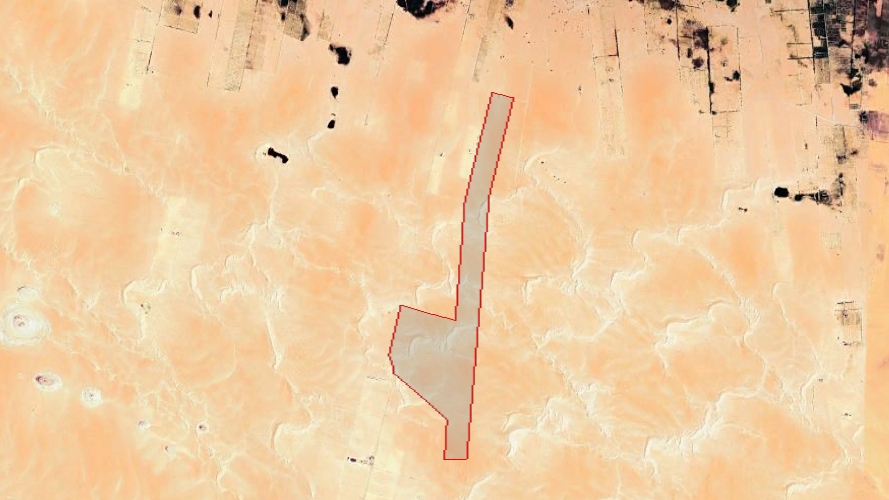
Tanit is one of the largest active development locations within Green Spot Siwa, covering approximately 88.2 hectares (210 feddan). The location has been acquired as part of the long-term development strategy for the first Green Spot in Siwa Oasis and is intended to become a large-scale example of sustainable desert agriculture combined with biodiversity enhancement.
The acquisition of Tanit has been funded by private investor Marcel Jong and his company Access2.IT as part of their ongoing investment in the development of Green Spot Siwa.
The local Egyptian company Marcelia Al Salam is responsible for the implementation, operations, and future management of the project.
Tanit is being developed as a productive agricultural landscape that combines commercial agriculture with environmental restoration.
The primary focus is the cultivation of locally adapted olive trees and Saidi date palms, two crops that have a long history in Siwa Oasis and are well suited to the local climate.
The project aims to demonstrate that agricultural production and biodiversity can successfully coexist by integrating productive farming with ecological design principles.
The long-term planting plan includes:
Barseem will play an important role during the development phase by improving soil fertility, adding organic matter, reducing erosion, and naturally fixing nitrogen in the soil.
The combination of trees, ground cover, and organic matter production is intended to improve soil quality over time while creating a more resilient agricultural ecosystem.
A key feature of the Tanit design is the creation of a 15-meter-wide green border surrounding the entire property.
This border will consist of a diverse mixture of trees and vegetation selected for their ecological value and ability to thrive in desert conditions.
The objectives of the border are to:
Over time, this green border is expected to become an important ecological feature within Green Spot Siwa.
Tanit has already passed several important development milestones.
Current progress includes:
The next development phase focuses on installing the infrastructure required for large-scale planting operations.
The primary requirement for the next phase of development is securing funding for:
Once this infrastructure is in place, planting activities can begin on approximately 33 feddan of prepared land.
The first planting phase is expected to include approximately 10,000 olive trees, creating one of the largest olive planting projects within Green Spot Siwa.
Additional areas of the property will be developed in future phases as infrastructure and resources become available.
Tanit represents an important step in demonstrating how large-scale agricultural development can be combined with ecological restoration and biodiversity enhancement.
By integrating olive production, date cultivation, nitrogen-fixing crops, and diverse tree plantings, the project aims to create a productive and sustainable landscape that contributes to both economic and environmental objectives.
As development progresses, Tanit will become a key component of Green Spot Siwa and an important example of how desert land can be transformed into a productive, resilient, and biodiverse environment.